Want to be in the loop?
subscribe to
our notification
Business News
APARTMENT PROPOSAL DRAWS MIXED REACTIONS
The ministry's housing and real estate market management department said the classification would be based on four criteria.
These four criteria are planning and architecture (which includes connectivity to school, hospital, public transport and park, besides surrounding landscape and area); technical and social infrastructure (which include fire prevention system, water supply, elevator capacity and parking space, besides lighting system);
apartment quality (which includes quality of construction and equipment); and management service quality (which includes security, facilities and operational quality).
Class A will include starred apartment buildings that score 90 to 100 points; Class B will have apartments with scores from 80 to below 90 points; and Class C will have apartments that score below 80 points but are complying with the existing standards.
The draft circular said the classification would be implemented by provincial and municipal departments of construction.
The "stars" would be reviewed every five years, the draft said.
The draft is attracting mixed reactions.
Tran Duc Phuong, director of the Nam Tien Real Estate Company, said the classification of apartment buildings was necessary, as it would help prevent investors from exaggerating the quality of their projects.
Similarly, Nguyen Xuan Quang, chairman of the Nam Long Real Estate Company, said the criteria for apartment classification were in line with international practices and would contribute to cleaning up the property market, in which project quality was a vague factor.
"However, it is important to have measures to prevent shady behaviour during the classification of apartment buildings," Quang said, adding that an independent organisation should be founded to verify the set of criteria and classification.
Le Hoang Chau, president of the HCM City Real Estate Association, said the draft must clarify standards for high-end apartment buildings. Currently, many investors classify their projects as high-end units to push up prices, even though the classification is not justified.
Chau said the draft proposal still had unclear and impractical regulations, such as specifying the minimum area of high-end apartments as 60sq.m, which needed to be revised.
Nguyen Dang Son, deputy director of the Institute of Urban Research and Infrastructure Development, said the classification of apartment buildings should be done only for evaluation of quality that follows common standards as recommendations to home buyers.
Son said the prices should be decided by the market's supply and demand law, while service quality should be negotiated between the operators and the clients.
The classification regulations must be strict to prevent investors from lobbying to get higher classifications for their projects to push up prices to an unreasonable level.
Nguyen Trong Ninh, director of the Housing and Real Estate Market Management Department, said the draft proposal was expected to be issued at the beginning of the second quarter of this year. The draft proposals were incomplete and needed to be improved, Ninh said.
He said the classification of apartment buildings could be optional, adding that if developers needed to get a star classification for their projects, they could register for classification.
Source: VIR
Related News

INFRASTRUCTURE / CONSTRUCTION / LOGISTIC / PORT
VIỆT NAM-CAMBODIA TRADE GATHERS PACE TOWARDS $20 BILLION TARGET
Trade between Việt Nam and Cambodia continues to grow, remaining a bright spot and a key pillar of bilateral cooperation as the two countries aim to raise two-way trade to US$20 billion in the coming years. After setting a record of more than $11.3 billion last year, bilateral trade reached about $8.7 billion in the first eight months of this year, up 8.3 per cent year on year.
TECHNOLOGY
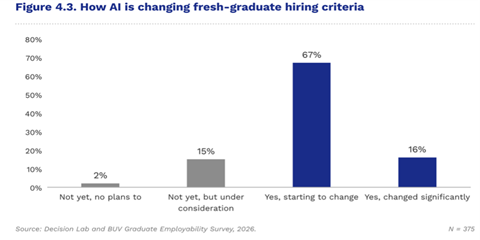
AI BEGINNING TO RESHAPE RECRUITMENT CRITERIA
Digital literacy is the only capability area in which fresh graduates meet employers’ expectations, according to a new report. Yet, it is also the standard rising fastest, as businesses increasingly expect new hires to use AI effectively in the workplace. Some 83 per cent of employers say AI has changed, or is beginning to change, their hiring criteria, while 94 per cent report higher expectations for digital and AI capabilities than they had two to three years ago.

INFRASTRUCTURE / CONSTRUCTION / LOGISTIC / PORT
ĐÀ NẴNG GREEN-LIGHTS US$105 MILLION THAI DEVELOPMENT DEAL
The central city has approved an investment proposal by Thailand’s WHA Group to develop infrastructure for the 400ha WHA Đà Nẵng Industrial Park project on two communes of Thăng Bình and Đồng Dương, with an investment of more than VNĐ2.7 trillion (US$105 million). The city said it approved WHA Industrial Development International's status as an investor in the project, which is expected to take place between 2027 and 2034.

VIETNAM ECONOMY INVESTMENT
MOBILE PHONE EXPORTS RISE 20% TO $51.8 BILLION IN FIRST NINE MONTHS
Exports of mobile phones and components rose 20 per cent year-on-year to nearly US$51.8 billion in the first nine months of 2026, with China, the US and Republic of Korea accounting for more than half of the total. Shipments to the three markets reached a combined $26.18 billion, or 50.6 per cent of total exports of the product group during the period, according to data from the Vietnam Department of Customs under the Ministry of Finance.

VIETNAM ECONOMY INVESTMENT
FRUIT AND VEGETABLE EXPORTS POISED TO HIT $10 BILLION IN 2026
Fruit and vegetable exports are on track to reach nearly US$10 billion in 2026, after rising 19.9 per cent year on year to nearly US$7.4 billion in the first nine months, driven by strong seasonal demand and abundant tropical fruit supplies. The Ministry of Agriculture and Environment said the growth reflected stronger international demand for fresh produce and processed agricultural products.
GARMENT / TEXTILE
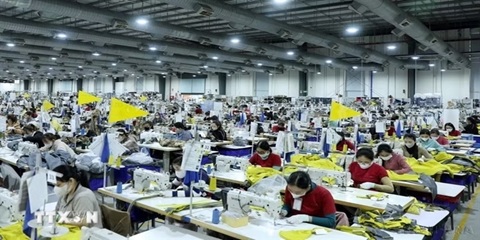
TEXTILE EXPORTS FACE DUAL CHALLENGES OF SUSTAINING ORDERS AND BOOSTING EFFICIENCY AMID GROWING COMPETITION
Data shows that the textile and garment sector maintained its growth momentum in the first nine months of this year. The industry's total export turnover reached an estimated US$35.721 billion in the first nine months of this year, up 3.3 per cent year-on-year. Despite posting encouraging export figures, Vietnamese textile and garment enterprises continue to navigate unpredictable market variables.
Events Sponsors






















